

A Plague Tale: Innocence review: A grisly, story-driven journey through Medieval France - walkergloold
France, 1348. Times are grim. The Black Plague has arrived—as have the Hundred Years' War and the Inquisition. Within a decade, leastwise a third of the population will die. Some estimates place that turn as high as two-thirds.
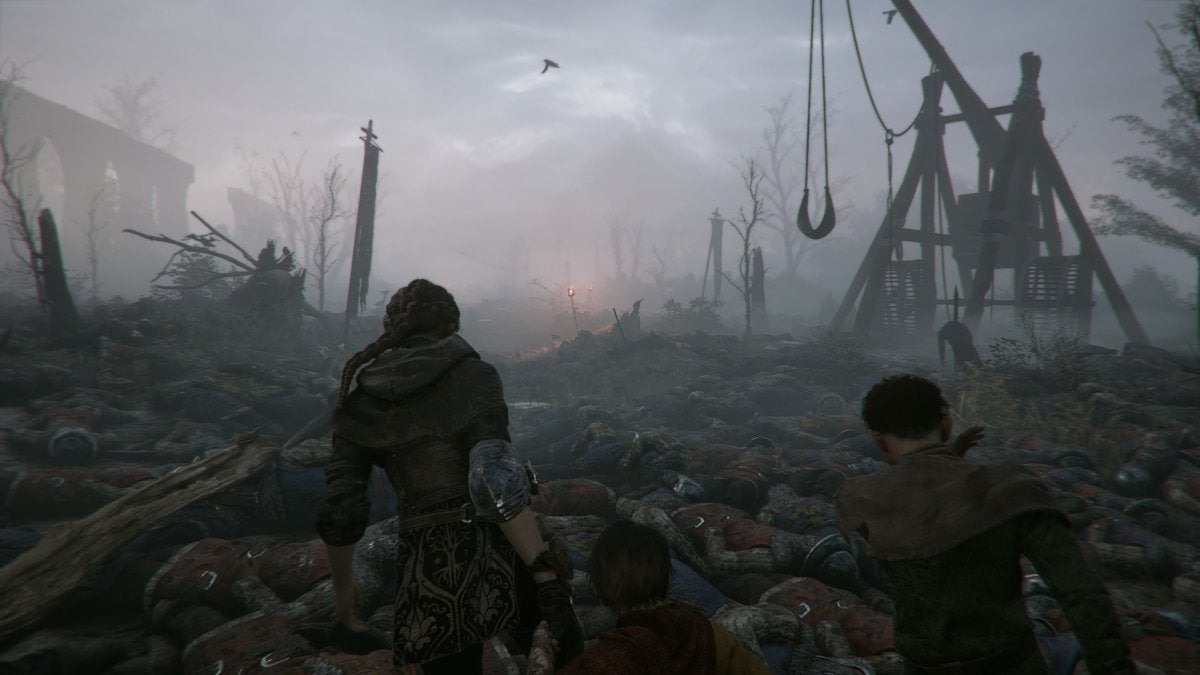
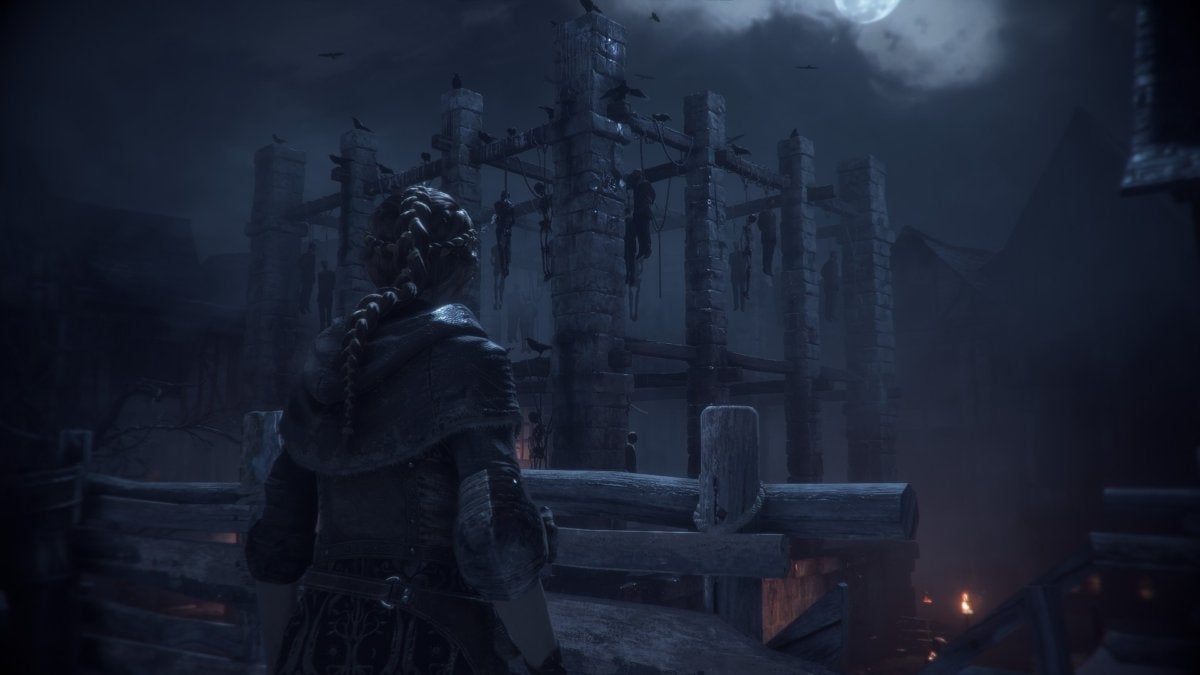
It feels closer to the latter in A Pest Narrative: Innocence. There's no ending to the bodies—unexhausted to rot in the streets, abandoned to houses marked with a chalked "X," piled high on foggy battlefields amid the trebuchets and wagons. And where there are bodies, worse is trusty to follow.
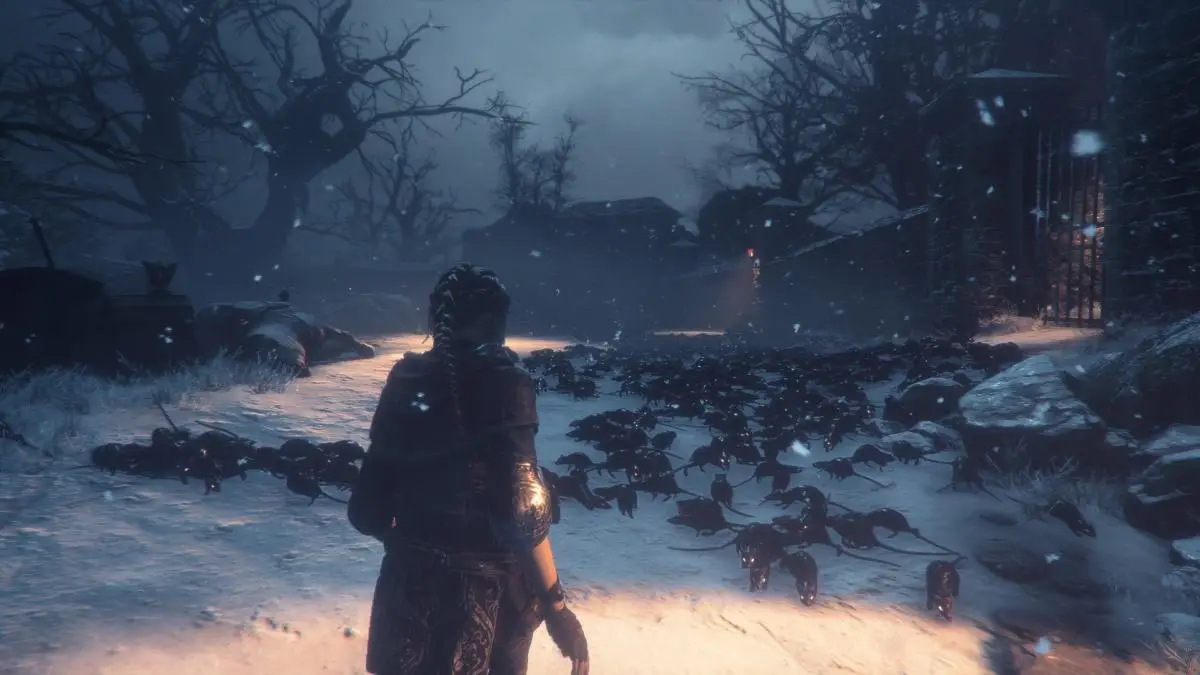
"Des rats." Even with the silent "T," the French is unmistakable: Rats. Rivers of them, dark pelt stippled with lambency red eyes, ready and waiting on the edges of the light. Hungry.
A syph upon ye
A Plague Tale is an anomalousness. Before we get into the game itself, I believe it's worth discussing the context the pun releases in. This is a singleplayer, story-driven game—one that Erodium cicutarium in around 10 hours long if you take information technology at a fairly meandering tread. Studios don't uprise games likeA Plague Tale anymore. Publishers put on't store games look-alike A Plague Narrative anymore.
 IDG / Hayden Dingman
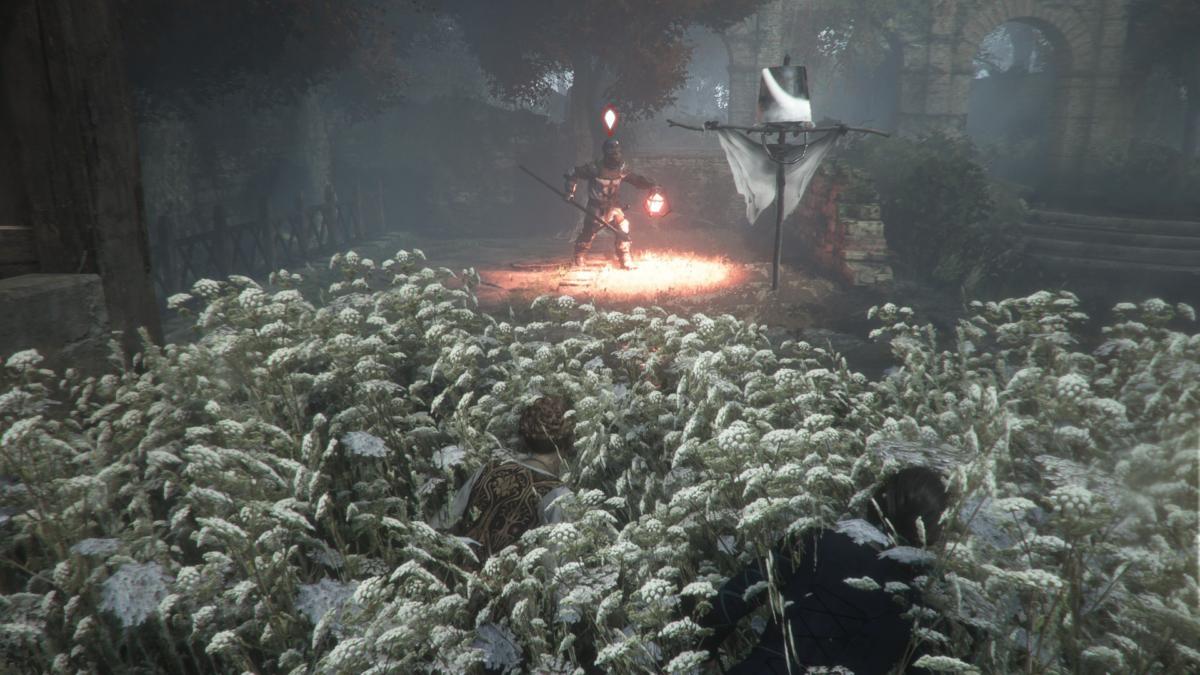
 And in time here it is. A Plague Tale is seemingly a stealing game, though even that is a pretty insecure definition. You sneak under tables, behind bookshelves, through tents, so on. Sometimes a sling factors into proceedings—a John Rock to the head to kill cleanly, or peradventure a rock to a lantern to kill in a more grisly way, as rats swarm from the shadows to eat a man alive.
It's bleak.
You gambling as Amicia de Rune, teenage daughter of a purple family. Amicia's cozy life story is upended by the Inquisition, which ransacks her ancestral home and kills nearly everyone she knows. She and her sickly brother Hugo are the only survivors, fleeing into the countryside.
Problem is, Victor Hugo is the single the Inquisition wants. Amicia's non sure why—he's only six OR seven years old—just he's the object of their pursuit and it falls to her to quite a literally lead Hugo past the hand through Medieval France in lookup of riskless haven. And yes, sometimes that means "under tables, behind bookshelves, and through tents," away from the watchful eyes of the Inquisition.
 IDG / Hayden Dingman
 The stealth vista is generic busywork though. It provides enough agency so nobody can mockingly accuse A Plague Tale of being a "walking simulator" or whatever. Hell, maybe that was the intent, to ward off those criticisms.
If so, it's a shame. The stealing doesn't add overmuch to A Plague Narration , and the battle adds even less. A trio of boss fights are the weakest part of the back, the story abrasion to a halt as you go through the age-old ritual of hit some guy in the head up with rocks—three multiplication, of course, because it's a computer game.
The rats are slenderly more interesting. That's the hook for A Plague Fib, hordes of chivy-carrying rats that swarm in the wickedness, forming a moving wall of flesh right at the edge of your torchlight. As much, there are pot of "puzzles" Here that demand lighting a fire, or putting one out, or poignant a unhorse generator around until you can clear the rats out of your path and get on to the next area. Nothing difficult, but it's at to the lowest degree Sir Thomas More unique than hit someone with rocks. It's also more thematically relevant, the rats some a courageous mechanic and an essential part of the story A Plague Tale is weaving.
 IDG / Hayden Dingman
 I can't help but wish A Plague Fib landed harder happening one pull though, either fleshing out its mechanics into a Sir Thomas More stimulating natural selection-horror game or stripping them out for a more story-driven run a risk. Instead information technology languors in the middle, and the parts you play end up feeling like obstacles you brook with to attain the parts you love—by which I nasty the report, and the relationship betwixt the deuce de Rune siblings.
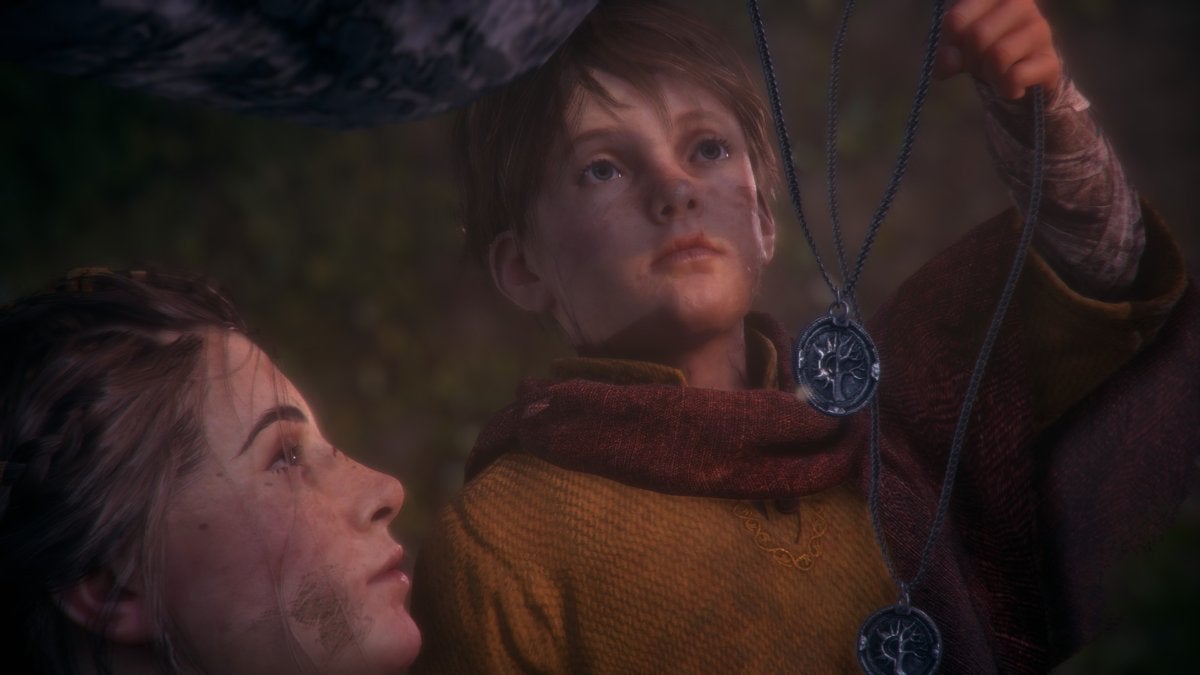
Occasionally there's a extraordinary moment of beauty among the raw. Victor Hugo is especially adept at tugging on heartstrings (peculiarly if you exchange to the much-improved French voice acting), with a charming naiveness that comes from organism sheltered in a manor his entire sprightliness. He's very excited virtually les grenouilles, or frogs. Flowers, as well. And one of my ducky scenes came primordial on, As Hugo hefted a harbour as tall Eastern Samoa his entire body and fictitious to be a knight, ambushing Amicia.
A Chivvy Tale is usually darker though. Hugo's shield naturally elicited a question from Amicia, "Where did you find that?" The answer came as we crested the next ridge to see a battlefield strewn with hundreds of French and English corpses. "Amicia, act up we have to…walk connected them?" same Victor-Marie Hugo, and then with immature innocence, "DO you think we're hurting them?"
 IDG / Hayden Dingman
 Information technology's surprisingly trenchant, this dynamic. The scenarios are gruesome, just experiencing it direct Victor-Marie Hugo and Amicia's back-and-forth injects a hint of humanity into incomprehensible tragedy, prevents IT from tone exploitatory. It's harrowing, dead, but not torture smu. IT feels earned.
The same could atomic number 4 said of the more supernatural elements. As you might surmise after seeing the rat swarms, A Plague Tale isn't the most accurate retelling of the Black Plague. That said, it's fairly adept at weaving in collaboration historical fact and fantasise, drawing upon Medieval concepts like interpersonal chemistry and the role of the Catholic Church to terra firma its story in the era, reminiscent of Umberto Eco's Name of the Rose.
Another close analogue is that Sean Bean film Black Death, which took a similar "What if the Black Plague were a curse, as more or less Mediaeval theologians thought?" approach, albeit with mixed results. A Hassle Tale pulls it off better. The final boss combat is wildly sinful, just the fib is so meticulously laid outgoing, the rules so established by that point, that it still feels sensible. Silly, merely valid. (For a video game with a similar tone, see Hellblade.)
 IDG / Hayden Dingman
 I do wish ethical motive played into proceedings a little Sir Thomas More, given the religious overtones. There are hints that might be the case along the way. A violent violin sting plays whenever you murder the showtime enemy in an area, which inevitably made Pine Tree State feel I'd done something wrong. A Plague Tale even hands out a few achievements for taking the nonlethal approach, and Hugo and some other friendly characters will comment thereon, urge you to sneak past instead of attack. None of it matters though, far Eastern Samoa I could severalise. The ending is the synoptical for everyone, which made me wonder if alternate good/sinister endings were cut for time or budget constraints.
Bottom line
Nevertheless, I enjoyed it. A Plague Tale: Innocence feels anachronistic, like a gamey THQ would've released circa 2010—or incomparable THQ might remaster, circa 2019. It's unrelentingly straightforward, and I wasn't kidding when I said developers put on't make games like this any longer. Certainly not games that look like A Plague Tale.
I wish they would though. A Plague Tale is one of my favourite experiences so far this class because it's an outlier. IT knows the story it wants to narrate and it tells it in a tight and well-paced manner—and then it ends. Relinquished the sprawling and ultimately pointless stories we get from the regular visible-world get along, A Harry Tale feels like a refreshing alternative. I'm surprised (and grateful) information technology got made at each, and I hope Asobo Studio's earned another experimentation the likes of this in the future.

Source: https://www.pcworld.com/article/397476/a-plague-tale-innocence-review.html
Posted by: walkergloold.blogspot.com
0 Response to "A Plague Tale: Innocence review: A grisly, story-driven journey through Medieval France - walkergloold"
Post a Comment